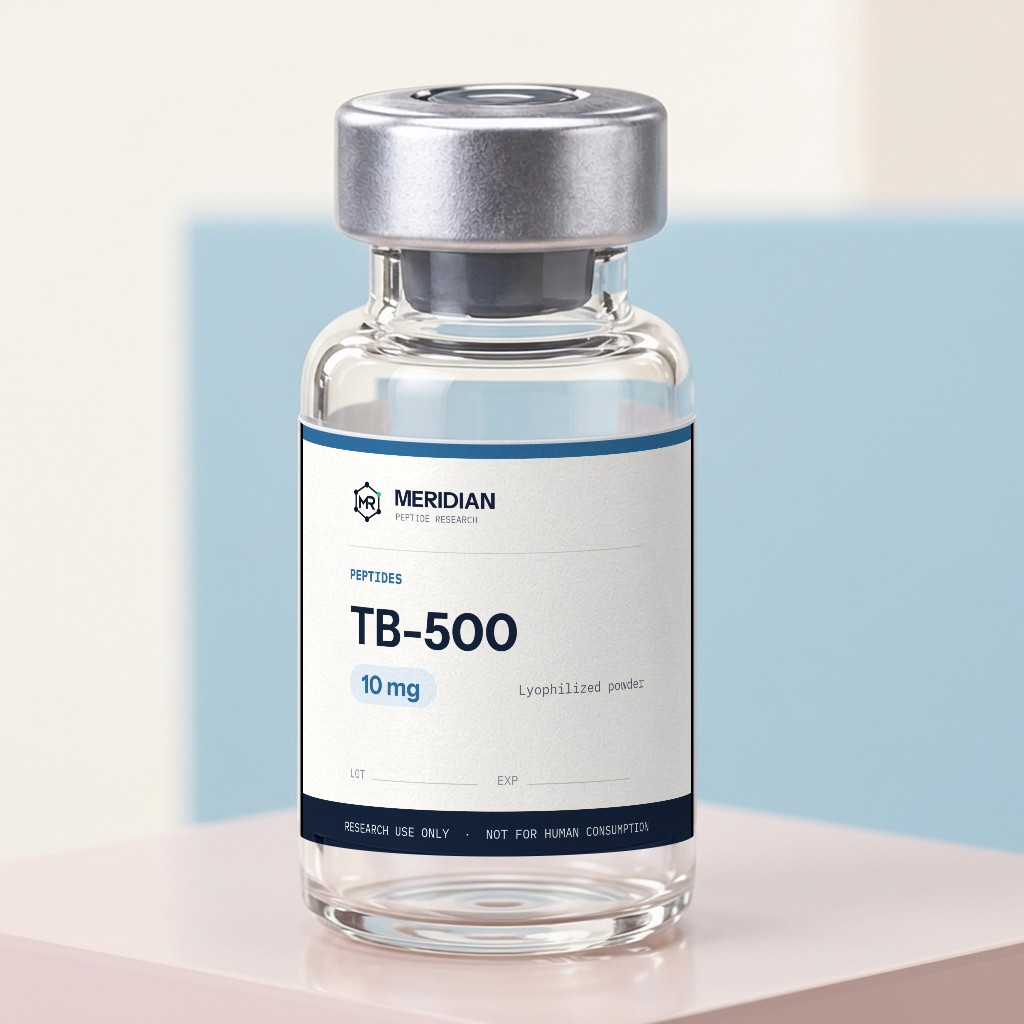

Peptide Nomenclature: Sequences, Mass and Identity
The same peptide can appear under a code name, a sequence, a trade designation and a registry number. Knowing how those identifiers relate makes catalog entries checkable.
Why one compound has several names
Peptides acquire names at different stages and from different communities. A development code from the originating laboratory often sticks permanently. A descriptive name may reference the source protein or a fragment position. A trade name applies to a specific formulated product rather than the molecule. And an informal name may circulate in a field long after a formal designation exists.
None of these are unique identifiers in the way a sequence or a registry number is. Two suppliers can use the same short name for materials that differ in a modification, an amidation at the C-terminus, or a salt form. This is why a catalog entry that gives only a name is less informative than one that gives a sequence, a formula and a mass.
The sequence is the primary identifier
A peptide's sequence is written as an ordered string of amino acid residues from the N-terminus to the C-terminus, using either three-letter codes such as Gly-Glu-Pro or single-letter codes such as GEP. Order matters absolutely: two peptides with the same composition and different order are different molecules with different chromatographic and biological behaviour.
Standard notation carries modifications explicitly. Ac- at the start denotes N-terminal acetylation. -NH2 at the end denotes a C-terminal amide rather than a free acid. A D before a residue, as in D-Ala, denotes the D stereoisomer, frequently introduced to slow enzymatic cleavage. Bracketed positions in a name, such as a substitution written at position two, indicate a specific residue swap relative to a parent sequence. Cyclisation, disulfide bridges and conjugated groups such as a fatty acid chain also appear in the written form when the notation is complete.
Any of these modifications changes the molecular formula and the mass, so they are checkable rather than merely descriptive.
- Ac- : N-terminal acetyl group.
- -NH2 : C-terminal amide.
- D-Xaa : D-stereoisomer of the named residue.
- Cyclo(...) : cyclised through the enclosed residues.
- Numbered substitution : residue replaced at that position relative to the parent sequence.
Formula and molecular weight
The molecular formula follows arithmetically from the sequence and its modifications: sum the residue compositions, subtract one water molecule per peptide bond formed, and apply the modifications. From the formula, two different masses can be calculated and both appear in practice.
Average molecular weight uses the average atomic masses of the elements as they occur naturally and is the figure normally quoted on a catalog page and used for weighing. Monoisotopic mass uses the mass of the most abundant isotope of each element and is the figure that matters when interpreting a high-resolution mass spectrum. For a small peptide the two are close; as chain length grows they diverge noticeably, which is a routine source of confusion when a spectrum is compared against a catalog number.
A further complication is salt form. A peptide purified by reversed-phase chromatography with trifluoroacetic acid in the mobile phase is generally isolated as a TFA salt; acetate salts are also common. The salt contributes mass, so the mass of the powder in a vial is not the mass of the free peptide. A report that states net peptide content resolves this; one that does not leaves an ambiguity of a few percent to well over ten percent depending on the number of basic residues.
How mass spectrometry confirms identity
Identity confirmation compares an observed mass against the theoretical mass calculated from the claimed sequence. Electrospray ionisation typically produces a series of multiply charged ions, from which the neutral mass is deconvoluted; MALDI more often yields a singly charged species directly. Either way the deliverable is an observed mass with an associated tolerance.
Agreement within tolerance is strong evidence that the material has the claimed composition. It is not proof of the claimed sequence, because sequence isomers — the same residues in a different order — share a formula and therefore a mass. Distinguishing them requires tandem mass spectrometry, where the molecule is fragmented and the fragment masses map the order of residues, or classical sequencing.
Mass measurement is also blind to stereochemistry. A D-residue and its L counterpart are identical in mass. Where stereochemistry is part of the specification, it has to be established by another method such as chiral amino acid analysis after hydrolysis.
CAS numbers and registry identifiers
A CAS Registry Number is an identifier assigned by the Chemical Abstracts Service to a specific substance. Where one exists it is a useful cross-reference, because it points at a defined substance rather than a name in general use.
Two cautions apply. Not every peptide has one, particularly newer research sequences and multi-component blends, and the absence of a CAS number is not a defect in a catalog entry. And a CAS number can be specific to a particular form — free base versus a named salt, for instance — so a number that matches at the molecule level may still not describe the exact material supplied. Read it alongside the sequence and mass rather than in place of them.
Checking a catalog entry
A complete identity block gives the name and known alternate names, the sequence in single- or three-letter code including modifications, the molecular formula, the average molecular weight, the CAS number where one exists, the salt form or counter-ion, and the physical form as supplied.
With those in hand the entry becomes verifiable rather than assertive: the formula can be checked against the sequence, the mass against the formula, and the mass on the certificate against both. Our documented product pages carry this block in the overview section, and the lot verification tool ties the analytical record back to the specific batch of material.
References
- IUPAC-IUB Joint Commission on Biochemical Nomenclature, Nomenclature and Symbolism for Amino Acids and Peptides.
- United States Pharmacopeia, General Chapter <1055> Biotechnology-Derived Articles — Peptide Mapping.
- United States Pharmacopeia, General Chapter <736> Mass Spectrometry — instrumentation and mass accuracy considerations.
- CAS Registry, Chemical Abstracts Service — substance identifier scope and assignment.
References are to published standards and nomenclature documents. Where evidence on a specific compound is preliminary, that is stated in the text rather than smoothed over.